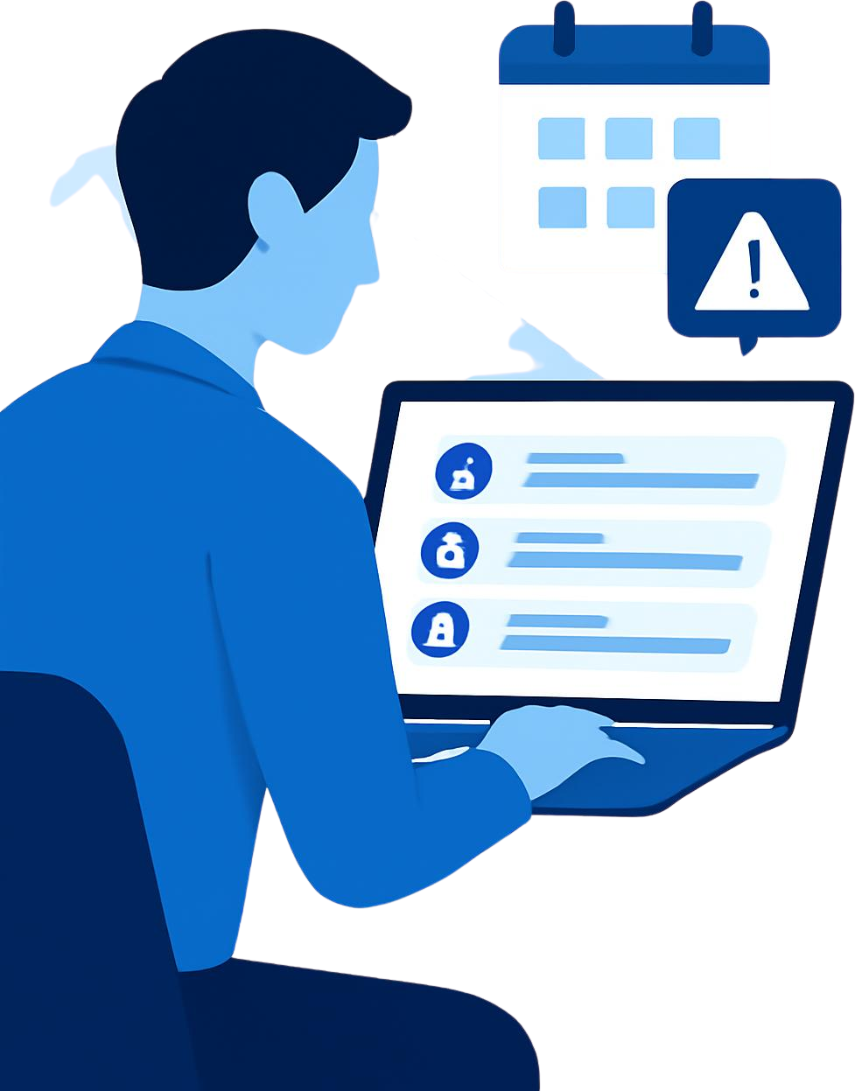
Managers call HR when someone is off sick. HR asks which system has the record. Nobody is sure whether the absence was logged, approved, or even noticed until a project deadline is missed.
Absence management is how organisations fix that problem — by recording, tracking, and understanding every employee absence in one place, not scattered across email, texts, and spreadsheets.
In this guide, you will learn what absence management is, how it differs from leave management, the main absence types HR teams track, and why growing organisations invest in dedicated absence tools.
For the full overview, read our complete guide to absence management.
What Is Absence Management? (Definition)
Absence management is the process of recording, monitoring, and managing all employee absences from work — planned and unplanned. It covers who is off, why, for how long, and what patterns emerge over time.
Unlike basic leave tracking, absence management includes:
- Planned leave — annual leave, PTO, and pre-approved personal days
- Unplanned absence — same-day sickness, emergencies, and no-shows
- Short-term absence — hours to a few days, often repeated
- Long-term absence — extended sickness, parental leave, or medical leave
- Authorised vs unauthorised absence — approved vs unexplained time off
The goal is simple: complete absence visibility, accurate records, and early action on disruptive patterns — for HR, managers, and the wider organisation.
Platforms like TimeOffLedger combine absence recording with leave management, attendance check-in, and team wallchart visibility — so every absence type lives in one system.
Absence Management vs Leave Management
These terms are related but not identical. HR teams should understand both:
| Aspect | Leave management | Absence management |
|---|---|---|
| Primary focus | Approved, planned time off | All absences — planned and unplanned |
| Typical workflow | Request → approve → deduct balance | Record → analyse → intervene if needed |
| Key data | Balances, accruals, carryover | Frequency, duration, absence rate, trends |
| HR priority | Fair, accurate leave administration | Reduce disruptive absenteeism |
Leave management handles the approval process. Absence management adds pattern analysis, unplanned absence recording, and the reporting HR needs to address absenteeism before it escalates.
Most growing teams need both working together — not one without the other.
Why Does Absence Management Matter?
Employee absence affects far more than the individual who is off:
- Operational disruption — unplanned absences leave teams understaffed without warning
- Cost — absenteeism reduces productivity and increases overtime or temporary cover costs
- Team morale — colleagues covering unexpected gaps burn out faster
- Compliance — no audit trail for absence records creates legal and HR exposure
- Pattern blindness — without data, recurring absence problems go unnoticed for months
- Customer impact — service delivery suffers when key people are absent unexpectedly
Structured absence management turns reactive crisis handling into proactive workforce planning.
Types of Employee Absence
HR teams should categorise absences consistently for meaningful reporting:
1. Planned absence
Pre-approved time off — annual leave, PTO, scheduled personal days, and public holidays. Teams can prepare coverage in advance.
2. Unplanned absence
Unexpected time off — same-day sick leave, family emergencies, and no-shows. Creates the most immediate operational disruption.
3. Short-term absence
Absences lasting hours to a few days. High frequency of short-term absence often warrants a manager or HR conversation.
4. Long-term absence
Extended sickness or medical leave lasting weeks or months. Requires return-to-work planning, phased return, and compliance documentation.
5. Authorised vs unauthorised absence
Authorised absence is approved or covered by policy. Unauthorised absence — unexplained lateness or no-shows — needs separate tracking and escalation.
For a detailed comparison, see planned vs unplanned absence — covered later in this series.
What Does Absence Management Include?
A complete absence management process typically covers six areas:
1. Absence Recording
Every absence logged in one system — planned leave requests, sickness notifications, lateness, and unpaid absence. No email or text message exceptions.
2. Manager Visibility
Managers see who is off today, this week, and next month on a shared team wallchart — essential for redistributing work when someone calls in sick.
3. Pattern Monitoring
HR tracks absence frequency, duration, and trends by employee, department, and location to identify problems early.
4. Reporting and Metrics
Absence rate, frequency rate, Bradford Factor, and planned vs unplanned ratios turn raw data into actionable insight.
5. Policy Enforcement
Sick leave rules, trigger points for HR review, and return-to-work procedures applied consistently through the system.
6. Compliance Documentation
Full audit trail of every absence record — who logged it, when, and any attached notes — for disputes and regulatory requirements.
Key Absence Management Metrics
HR teams use these metrics to understand absence across the organisation:
| Metric | Formula / description |
|---|---|
| Absence rate | Total absence days ÷ total working days × 100 |
| Frequency rate | Number of separate absence spells per employee |
| Bradford Factor | Frequency² × total days absent |
| Planned vs unplanned ratio | Percentage split between approved leave and unexpected absence |
For strategies to reduce high absence rates, read how to reduce employee absenteeism — the next topic in this series.
Absence Management Examples for HR
Example 1: Same-day sick leave
An employee calls in sick at 8am. The manager logs the absence in the system immediately. The team wallchart updates, and the project lead redistributes today’s tasks before the morning standup.
Example 2: Recurring short-term absence
HR runs a monthly absence report and notices one employee has had four separate sick days in eight weeks. A trigger point in the policy prompts a supportive manager conversation — before the pattern becomes a formal disciplinary issue.
Example 3: Planned leave with team conflict
Two team members request the same week off. The manager checks the wallchart, approves one request, and asks the other to choose alternate dates — before a coverage gap reaches the client.
Example 4: Long-term sickness
An employee is off for six weeks with a medical condition. HR tracks the absence duration, maintains compliance records, and plans a phased return-to-work schedule documented in the system.
Manual Tracking vs Absence Management Software
Many teams start with spreadsheets and email. It works until unplanned absences multiply:
| Factor | Spreadsheet / email | Absence software |
|---|---|---|
| Unplanned absence recording | Inconsistent, often missed | Logged same day, every time |
| Pattern reporting | Manual, hours of work | Automated reports and trends |
| Team visibility | Separate calendars | Unified wallchart |
| Audit trail | Scattered records | Full absence history |
| Attendance connection | Not linked | Check-in data linked to absence records |
Explore full attendance and absence tracking features including recording, reporting, and team wallchart views.
Who Is Responsible for Absence Management?
HR Teams
Configure policies, run absence reports, monitor trigger points, and maintain compliance records.
Managers
Log unplanned absences on the day they happen, approve planned leave with team visibility, and escalate patterns to HR.
Employees
Report sickness and request leave through self-service — replacing phone chains and informal text messages.
Finance and Operations
Use absence data for workforce planning, cost analysis, and payroll preparation.
Related Guides in This Series
This article is part of our Absence Management content series:
- Complete Guide to Absence Management — full overview (start here)
- How to Reduce Employee Absenteeism — practical HR strategies
- Planned vs Unplanned Absence — differences and how to manage each
- How to Track and Report Employee Absences — metrics and reporting guide
Final Thoughts
Absence management is more than logging sick days — it is how HR teams stay ahead of disruption, protect team productivity, and maintain fair, consistent records for every type of employee absence.
When planned leave, unplanned sickness, and attendance data live in one system, managers respond faster and HR acts on patterns before they become crises.
Start your free 30-day trial of TimeOffLedger — no credit card required.